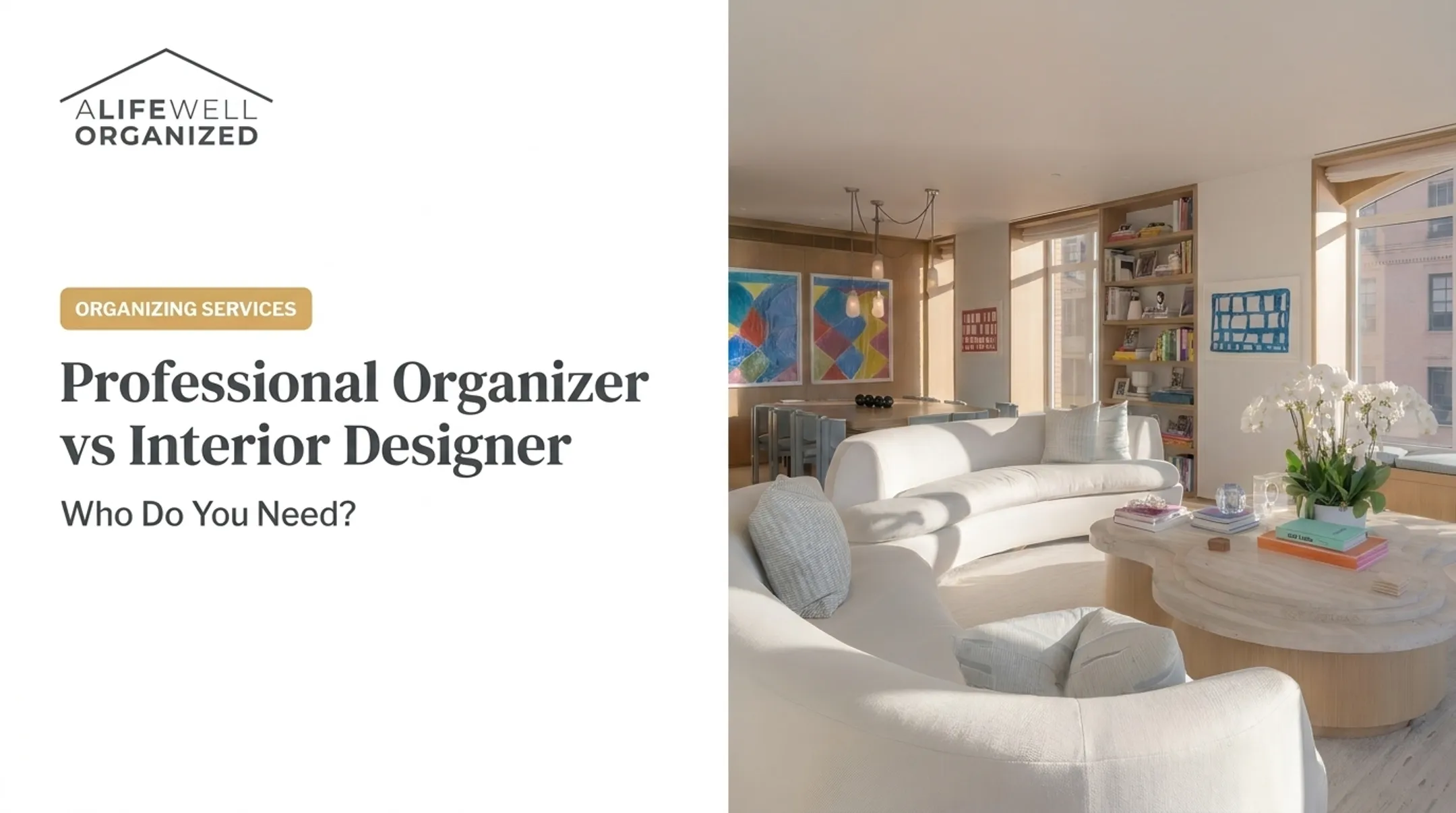

Design and organizing are different skills. One shapes how a space looks and flows. The other tests whether it works for real belongings and real routines. In the 2026 Houzz kitchen study, 41% of renovators cited dissatisfaction with the old style and 38% cited deterioration or dysfunction. Homeowners want both outcomes.
This article covers who does what, how the collaboration runs, when to bring each professional in, and how to build a partnership that lasts.
Key Takeaways
- Designers lead the visual, spatial, and technical direction; organizers lead belongings, routines, and systems.
- Bring the organizer in before cabinetry, shelving, and closets are finalized.
- You define priorities, approve decisions, and explain how your household really lives.
- The goal is a personal, attractive, maintainable space, not minimalism.
What Each Professional Brings to the Project
The interior designer's role
The designer typically leads the aesthetic and spatial vision: style, materials, color palette, furniture, lighting, and finishes. CIDQ describes the scope as including space planning, materials, furniture, lighting, documentation, and code compliance.
Scope varies by professional and contract. Architectural drawings, permitting, and construction management are not automatic, so confirm what is included in writing.
The professional organizer's role
The organizer starts with what you own and how you use it. That means evaluating categories, quantities, accessibility needs, and pain points, then building practical systems for the finished space.
Typical questions an organizer answers:
- Where should cookware live, given how often you cook?
- How should work-from-home supplies be reached during a call?
- Which clothing is grouped by season, and which by outfit?
- What needs daily access versus occasional access?
The organizer also guides decluttering, storage zoning, product selection, labeling, final placement, and maintenance habits, without forcing a one-size-fits-all lifestyle.
Where their expertise overlaps
Both solve storage problems from different angles. The designer folds storage into the visual concept. The organizer checks whether it will hold real belongings.
Together they can shape:
- Drawer depths and shelf spacing
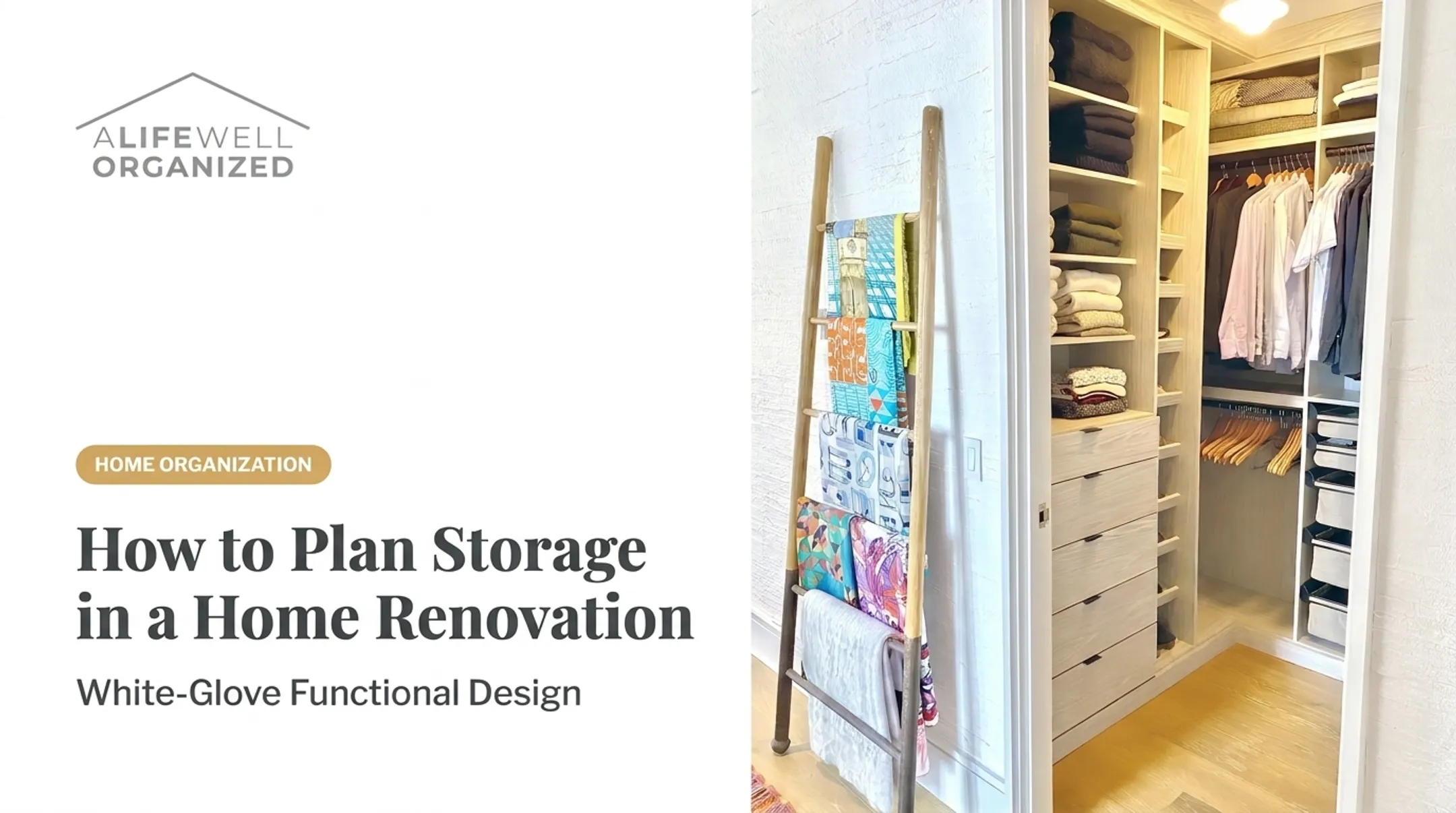
- Cabinet heights and closet layouts
- Charging areas and entryway drop zones
- Furniture placement
These decisions are cheap to change on paper and costly after installation.
The client's role
Neither professional can infer your habits from drawings. You supply the routines, sentimental items, entertaining style, accessibility needs, preferred visibility (open versus concealed), and future plans.

How an Organizer and Interior Designer Work Together
Start with a shared discovery meeting
Hold one kickoff conversation covering goals, scope, budget, timeline, aesthetic preferences, frustrations, routines, and decisions already made. Then write a single project brief so the designer, organizer, contractors, and you share priorities and vocabulary.
Audit belongings and daily use
The organizer reviews relevant belongings and watches how rooms function. Categories might include clothing, kitchen equipment, paperwork, children's items, collections, entertaining supplies, or business materials.
Document the findings:
- Measurements and quantities
- Access preferences
- What must stay visible, concealed, nearby, or easy to reach
Translate findings into design decisions
The audit feeds the designer's choices on cabinetry, built-ins, closets, drawer configuration, outlets, lighting, and circulation.
Take a pantry. If the organizer learns the client owns a large collection of small appliances, bakes weekly, and prefers decanted dry goods, the designer can add deep appliance drawers, an outlet-equipped counter zone, and shelves spaced for uniform containers.
NKBA guidance suggests keeping frequently used items roughly 15 to 48 inches above the floor, a useful starting point for those conversations.
Coordinate sourcing, installation, and revisions
Review proposed products and built-ins together, checking dimensions, appearance, durability, accessibility, budget, and fit with the design.
Don't buy storage products in bulk early. Edit and measure belongings first, or you end up with bins for things you later donate.
At A Life Well Organized (ALWO), the team assesses existing bins and shelving before bringing in anything new, then takes precise measurements and builds a wishlist for client approval.
Complete the space and hand over the systems
The designer finishes the visual styling. The organizer places belongings, sets categories, labels where helpful, and shows the household how to maintain it all.
End with a walkthrough that records:
- Open decisions
- Maintenance expectations
- Donation or disposal plans
- Adjustments needed after you've lived in the space

When to Bring an Organizer Into the Project
Before the design plan is final
This is the strongest moment. Storage dimensions, layouts, and built-ins are still flexible. Organizing first sometimes shows you need a targeted fix, not a bigger renovation, because existing space was underused or poorly zoned.
During a renovation or remodel
The organizer checks plans against actual belongings in closets, kitchens, utility areas, entryways, home offices, and specialty collections. Conflicts surface early, including:
- Shallow drawers and dead corners
- Shelves at the wrong height
- No room for everyday items
Storage pressure is a common renovation driver. A Houzz study found that among homeowners adding a butler's pantry, 30% wanted to avoid clutter and 22% wanted more storage.
Before move-in or final styling
An organizer can coordinate unpacking, sort by room and function, and decide what belongs in the new home. That matters for styling: a beautifully layered shelf looks wrong next to unopened boxes and misplaced daily items.
When refreshing a home without construction
No renovation is required. Furniture edits, room zoning, decluttering, product sourcing, and rearrangement all count. In a living room, for instance, organizing may show that a media console holds mostly paperwork. Move the paperwork elsewhere and the console can support display again, opening the layout with no structural work.
During a major life transition
Both skill sets matter during moves, downsizing, estate clearances, new household needs, and work-from-home shifts. The organizer manages belongings and logistics while the designer shapes the new environment.

When possessions carry financial, family, or emotional weight, empathy, discretion, and client control matter most. AARP notes that downsizers should stay involved in decisions and may want help from a trusted person or professional.
Why the Combined Approach Works
Working together from the start creates advantages neither discipline delivers alone:
- Cohesion and access together. Storage feels built into the design instead of bolted on afterward.
- Less rework. Testing real belongings, measurements, and routines before installation catches mistakes early.
- Easier daily life. A well-designed, well-organized home can ease routines and make order easier to sustain.
No study quantifies the rework savings, so treat that point as practical logic, not a guarantee. Easier daily life is not a promise of mental-health outcomes; research on clutter and stress is observational.
How to Make the Partnership Run Smoothly
Settle the basics before work begins:
- Define responsibilities and approval paths
- Clarify fees and purchasing authority
- Align on installation expectations
- Agree how changes get handled
Then keep coordination tight:
- Schedule regular check-ins
- Share measurements and documentation
- Set decision deadlines
- Use one channel for you and the other trades
Respect your expertise about your own home. When taste and function collide, return to your stated goals. Consider reuse and donation before buying new; the EPA lists selling or donating as alternatives to discarding.
How to Choose the Right Professionals
Ask both professionals:
- Have you worked together before?
- How do you coordinate with other trades?
- What does your scope include and exclude?
- How do you protect confidential belongings?
- How do you handle revisions?
Look for complementary strengths:
- An organizer who thinks spatially and communicates with design teams
- A designer who plans for storage, routines, accessibility, and long-term use, not appearance alone
That pairing keeps collaborative projects on track. For clients in New York City and the Tri-state area who want white-glove support, A Life Well Organized brings NAPO-certified expertise to joint home projects, along with a four-phase Discover, Declutter, Organize, Balance method, confidential service, and full-service product sourcing.
Frequently Asked Questions
What do interior designers do exactly?
They develop and coordinate a space's aesthetic, spatial, material, furnishing, and sometimes technical direction. Exact scope depends on the designer's contract and credentials.
Can an interior designer also organize a home?
Some include basic storage planning or styling. A professional organizer goes deeper on belongings, decluttering, routines, and sustainable maintenance systems.
When should I hire a professional organizer during a renovation?
Before cabinetry, shelving, and storage plans are finalized. Keep them involved through installation, move-in, and system setup.
Do I need to declutter before hiring an interior designer?
No. An organizer's assessment can help the designer plan around what you truly own, use, and intend to keep.
How do an organizer and interior designer divide responsibilities?
The designer leads visual and spatial decisions; the organizer leads belongings, routines, storage, and maintenance. Functionality decisions are shared.
Can they work together without a renovation?
Yes. They can collaborate on room refreshes, moves, downsizing, decluttering, furniture placement, storage systems, and styling without any construction.