
Introduction
Ease of getting dressed, protection for your best pieces, and a calm feeling when you walk in define a luxury closet more than square footage or price tag.
Plenty of expensive closets fail that test. Rails are crammed, shoes are piled, and the lighting makes everything look flat. This guide covers luxury closet organization ideas for walk-in and reach-in spaces, including wardrobe zoning, display storage, premium details, decluttering, and the habits that keep it all working.
Key Takeaways
- Luxury organization blends access, visual calm, garment care, and personal design.
- Give clothing, shoes, handbags, jewelry, and seasonal pieces their own zones.
- Lighting, matching hangers, solid hardware, and mirrors create polish without clutter.
- Test the layout before building, then maintain it with small daily resets.
What Defines Luxury Closet Organization?
Expensive and luxurious are different things. A closet with exotic veneers can still be frustrating if you can't find your black trousers. Real luxury comes from planning, ease of use, quality materials, privacy, and a layout that fits your life.
Design Around the Wardrobe
Start with what you own and how you dress, then choose the storage. Consider:
- How much you hang versus fold
- Your daily routine and travel habits
- Whether you favor dressing by outfit or by category
- Who else shares the space
Architectural Digest's 2026 design coverage describes the closet as an extension of its occupant, which is the right instinct. Open shelving, seating, and jewelry compartments should reflect how the owner actually dresses.
Leave Room to Breathe
Restraint is the signature of a refined closet. Overfilled shelves and jammed rails undermine even the finest cabinetry. Leave visible gaps between hanging garments and empty space on shelves. If you can't slide a hanger without a fight, the closet is over capacity.
Luxury Closet Organization Ideas by Zone
Organize Clothing Around the Way It's Worn
Sort by how you live: everyday pieces, workwear, formalwear, outerwear, loungewear, and occasionwear. Put the most-used items between shoulder and knee height, where they're easiest to reach.
Mix storage types by garment:
- Hanging rods for jackets, shirts, and dresses
- Adjustable shelves for folded knits and denim
- Drawers or concealed cabinets for the rest
- Upper shelves for rarely worn items
Material matters. The Canadian Conservation Institute advises that knits and bias-cut garments should not hang, and that fragile or heavily decorated pieces belong flat. Fold sweaters, and pad the folds with acid-free tissue for valuable ones.
Balance Display and Concealment
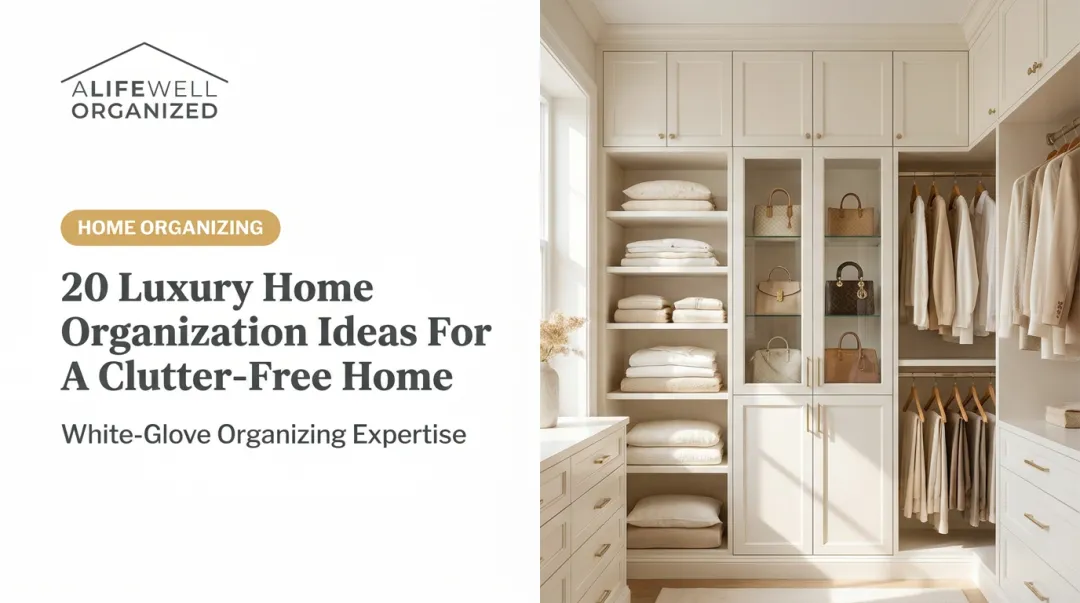
Show your favorites. Hide the rest. Glass-front cabinets or open shelves suit prized shoes, bags, and accessories, while casual items and overflow stay behind doors or in drawers.
Consistency creates the boutique look: matching hangers, aligned folds, and even spacing. Our own projects at A Life Well Organized often pair color-coordinated hanging garments with clear boxes and baskets for small items, which keeps a minimalist closet calm.
Give Shoes and Handbags Protective Homes
Plan shoe shelving around heel height and how often each pair is worn. Adjustable shelves, angled displays, and cubbies all work. John Lobb recommends shoe trees and rotating pairs so leather can dry and keep its shape.
For handbags:
- Store them upright with tissue stuffing to hold shape
- Keep structured pieces from being crushed
- Use dust bags or original boxes for pieces out of rotation
- Reserve eye-level display for the bags you love most
Hermès advises a temperate, dry place away from light. Display is lovely, but light exposure is a real trade-off for leather you rarely carry.
Build Storage for Jewelry and Accessories
Shallow, divided drawers with velvet or leather inserts suit watches, jewelry, sunglasses, belts, and ties. Keep watches from touching each other, and use individual pouches for delicate pieces.
A valet rod or a small staging area lets you assemble tomorrow's outfit without disturbing the rest of the closet.
Create Seasonal and Occasionwear Zones
Separate current-season, off-season, travel, and special-event items so the daily dressing area stays easy to navigate. Use upper shelves and labeled containers for low-rotation pieces.
At each seasonal change, review what's in storage. Anything you didn't wear last year deserves a hard look before it returns to the rail.

Design Details That Make Organization Feel Luxurious
Layer the Lighting
Good lighting does more than look pretty. Combine ambient light for the room, task light over hanging areas and drawers, and accent light on shelves or display pieces. A statement pendant or chandelier can anchor a larger walk-in when placement meets code.
Two cautions apply:
- Electrical planning: The 2021 International Residential Code sets closet clearances of 12 inches for surface-mounted enclosed fixtures and 6 inches for recessed ones, and bans open lamps and pendants. Local codes vary, so confirm with an electrician.
- Textile exposure: Light fades color and weakens fibers, so keep illumination to what you need for viewing and avoid UV.
Use Cabinetry and Hardware Strategically
Floor-to-ceiling cabinetry, soft-close drawers, glass doors, and concealed hampers make a closet feel architectural while hiding everyday clutter. Spend where hands touch daily: slides, hinges, and handles. Choose durable construction over finish alone.
Add a Dressing Station or Seat
An island, vanity, or bench supports folding, packing, putting on shoes, and laying out outfits. Leave about 36 inches of clearance around an island, a figure California Closets cites for larger layouts.
Smaller closet? Use a wall-mounted counter, a pull-out surface, or a compact stool.
Make Mirrors Part of the Plan
Choose a full-length, mirrored-door, pull-out, or three-way mirror based on space and habits. Place it where it reflects light and lets you review outfits, but not where it blocks circulation or creates odd repeating reflections.
Personalize Without Overwhelming
Artwork, monograms, special finishes, and sentimental objects make the space yours. Keep the palette restrained and surfaces mostly clear. A few meaningful pieces feel curated. Twenty feel cluttered.

How to Organize a Luxury Closet Step by Step, and Know When to Get Help
1. Assess the Wardrobe and Space
Measure the closet and note doors, windows, outlets, and lighting. Photograph problem areas. Track what you wear for a couple of weeks, and flag garments needing special care. Do this before buying a single organizer.
2. Declutter With Value and Responsibility
For each item, decide: keep, tailor, repair, donate, resell, or recycle. Handle sentimental and designer pieces with extra thought, and don't build premium storage around clothes you no longer wear.
In New York City, responsible drop-off options include:
- DSNY textile bins take clean, dry, bagged clothing, shoes, and accessories (not tax deductible)
- Housing Works accepts gently used items in great condition
- refashionNYC serves buildings with 10 or more units
Charitable deductions have IRS rules, so check Publication 526 or ask a tax adviser.
3. Assign Every Category a Home
Draw a zone map before choosing products: clothing, footwear, handbags, jewelry, accessories, laundry, travel items, and seasonal pieces. Daily categories go within easy reach. Prime display spots go to priority collections.
4. Test Before You Invest
Use temporary bins, shelf risers, and removable inserts to check placement and capacity before ordering custom cabinetry. Then fix your biggest problem first, whether that's lighting, shoe storage, or protected handbag space.
5. Know When to Hire a Professional
Hire a professional when you face:
- A large wardrobe or multiple household members
- A move or estate transition
- Valuable collections
- Limited time
- Complete confidentiality requirements
NAPO's hiring guidance suggests checking project experience, training, and certifications, since not every organizer specializes in luxury wardrobes.
In New York City and the Tri-state area, A Life Well Organized is a NAPO-certified, white-glove organizing firm. Its Discover, Declutter, Organize, Balance method starts with a complimentary evaluation, and the team can handle product sourcing and complex projects.

Maintain It: Everyday and Seasonal Systems
A beautiful closet stays beautiful through small habits.
Daily reset
- Return garments to their zones
- Set aside items needing cleaning or repair
- Clear dressing surfaces and skip temporary piles
Periodic reviews
- Check fit, wear frequency, and repairs
- Donate what no longer earns its place
- Confirm storage capacity still matches your wardrobe
Seasonal rotation
- Clean garments per care instructions before storing
- Use breathable cotton covers and acid-free tissue
- Inspect for moths, which damage wool and other animal fibers
- Keep relative humidity below 70%; the Canadian Conservation Institute cautions that higher levels risk damage
Leave enough space that what remains stays visible and reachable.
Frequently Asked Questions
What makes a closet feel luxurious?
A tailored layout, visual calm, quality finishes, good lighting, easy access, and personalized storage. Room size and expensive materials matter far less.
How do I organize a luxury closet?
Assess your wardrobe, declutter, then zone by category and frequency of use. Add specialized storage for shoes, bags, and jewelry, and set a maintenance routine.
Do I need a walk-in closet to create a luxury look?
No. Reach-in closets feel elevated with matching hangers, good lighting, concealed storage, quality hardware, double-hang vertical space, and a few selective displays.
What is the best way to organize shoes and handbags?
Use adjustable storage that protects shape and material. Keep favorites visible and within reach, and store rarely used pieces in dust bags or boxes.
How do I keep a luxury closet organized?
Reset daily, give every category a clear home, and review seasonally. Edit responsibly, and handle repairs and cleaning promptly.
When should I hire a professional organizer for my closet?
Consider one for large wardrobes, moves, estate transitions, valuable collections, shared closets, confidentiality concerns, or when you simply lack time.