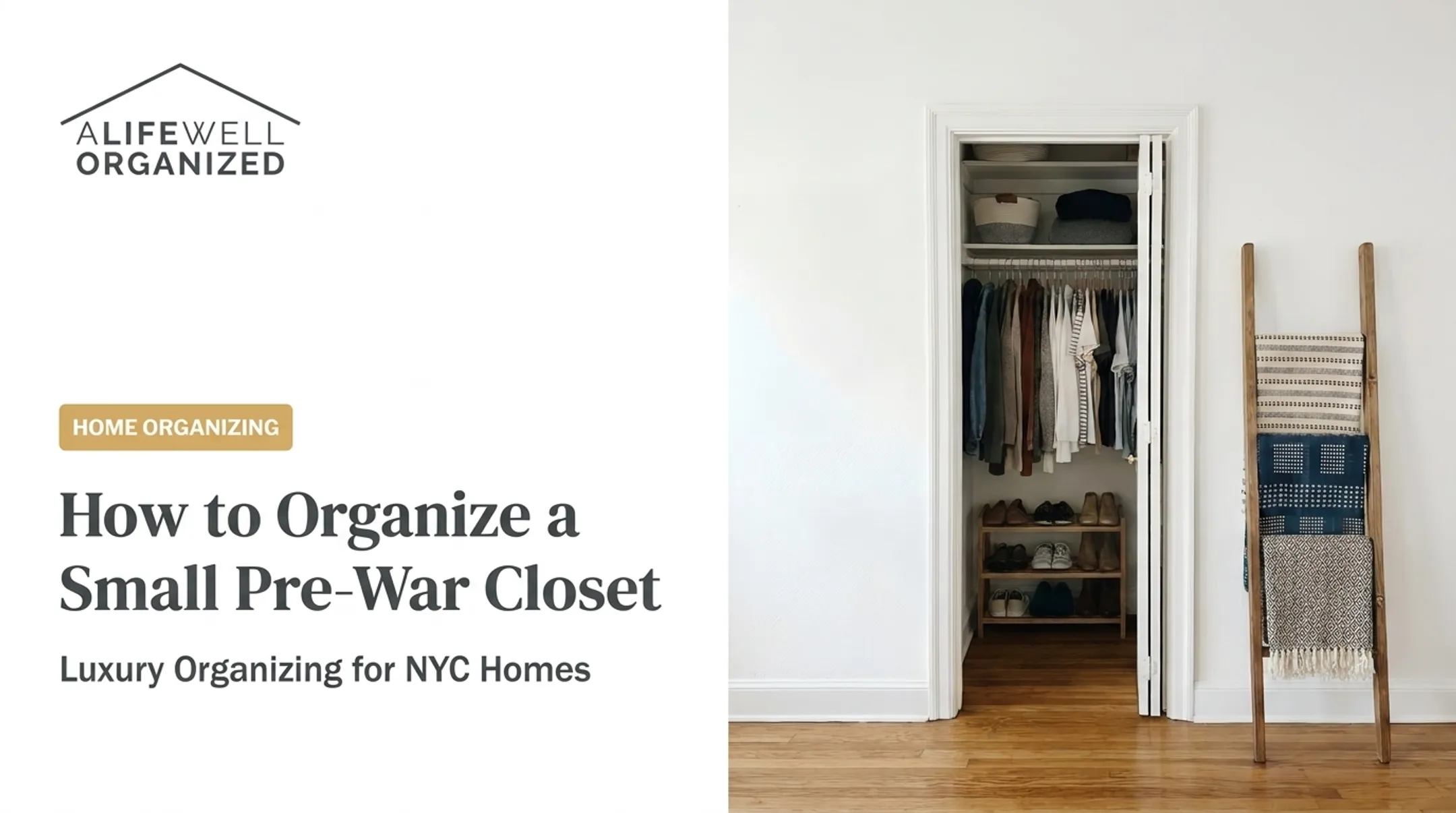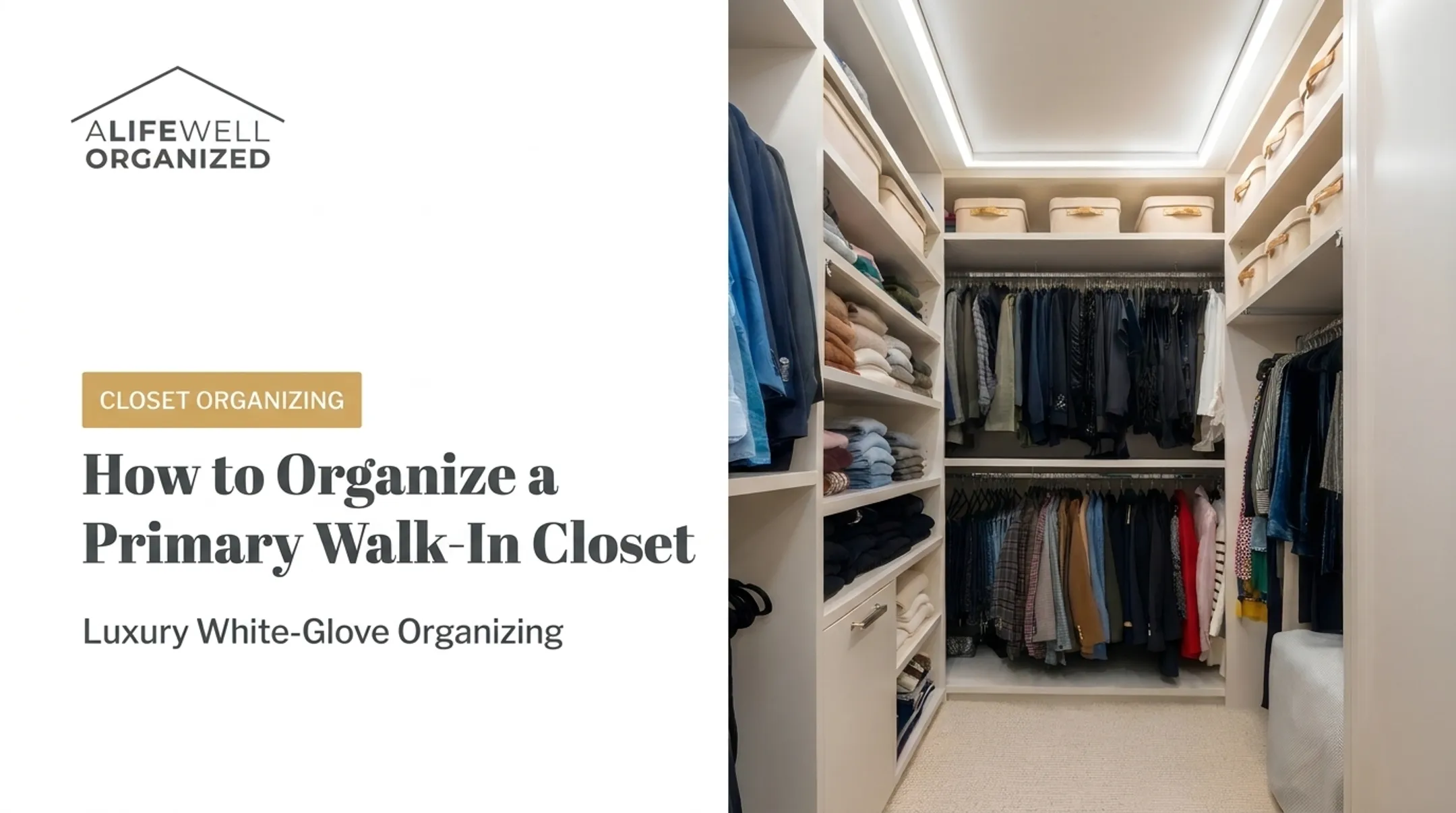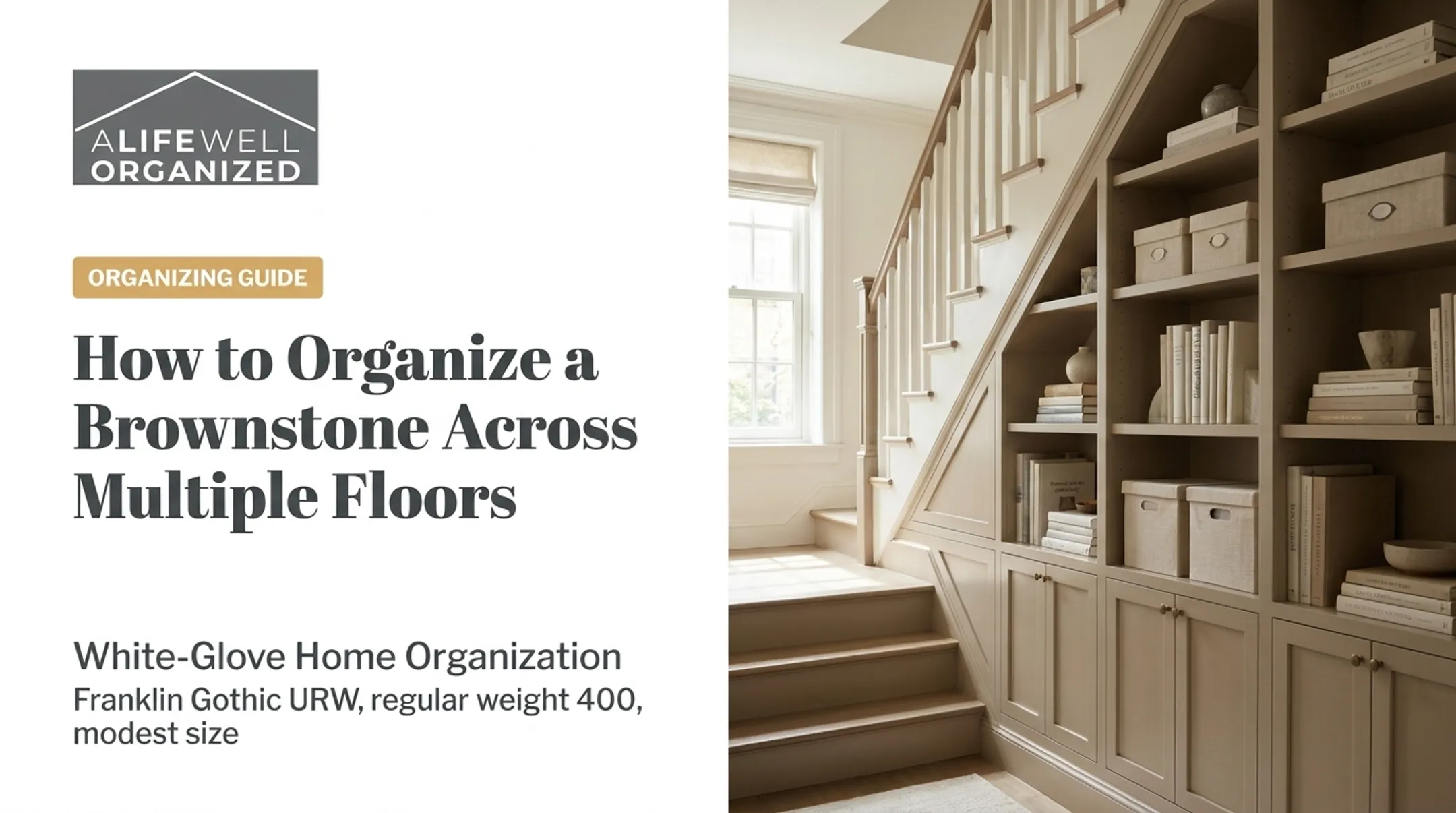

No two apartments behave alike. Layout, closets, building access, and household routines all change what works. This guide walks through four steps: assess the apartment, declutter intentionally, create accessible systems, and balance the space with simple habits.
Key Takeaways
- Declutter before buying storage, or bins just hide things you don't need.
- Store items near where you use them, ranked by how often.
- Go vertical, behind doors, and under the bed, but keep walkways clear.
- Pick systems you can maintain on a tired Tuesday.
How to Organize a Small NYC Apartment
Step 1: Discover the apartment and define how it needs to function
Start with an inventory before moving or buying anything. Walk through and note:
- Rooms, closets, cabinets, and drawers
- Entry points, windows, radiators, and outlets
- Existing storage and how well it works
Next, list what the apartment must support:
- Sleeping
- Working from home
- Cooking
- Exercising
- Entertaining
- Storing seasonal items
Mark where each activity currently struggles.
Then photograph or sketch awkward corners, narrow passages, high shelves, and dead space. Solutions should answer your actual apartment, not a generic Pinterest board.
Professional organizers begin the same way. A Life Well Organized opens every project with a Discover consultation, in person or virtual, to understand lifestyle, goals, and challenges.
Step 2: Declutter before organizing
Work by category, not room by room. Pull out all clothing, then all books, paperwork, kitchen items, toiletries, and sentimental pieces. Seeing everything together exposes duplicates hiding in different rooms.
Sort into six groups:
- Keep
- Donate
- Sell
- Recycle
- Dispose responsibly
- Decide later (with a firm deadline)
For each item, ask whether it's useful, regularly used, replaceable, meaningful, or worth the space it takes. Don't buy storage for things that haven't earned a place yet.
NYC offers real outlets for what leaves:
- Housing Works takes gently used clothing, shoes, and housewares, but not electronics, appliances, or mattresses.
- refashionNYC accepts textiles, even damaged ones, from buildings with 10 or more units.
- Electronics like TVs and computers can't go out with regular trash or recycling.
- Bulk items: up to six large pieces per collection day, and mattresses must be sealed in a plastic bag.
Decide the handoff for each pile before starting the next category. Otherwise donation bags camp by your front door for weeks.
Step 3: Create zones and assign every item a home
Assign storage by point of use:
- An entryway drop zone for keys and mail
- Cooking tools near the prep area
- Frequently worn clothes at easy reach
To add capacity without eating floor space:
- Vertical shelving
- Hooks and over-the-door organizers
- Drawer inserts
- Under-bed storage
- Narrow furniture
One caution on under-bed bins: NAPO chapter guidance says to measure clearance first.
Group items by function and frequency. Daily essentials sit at eye-to-hip height. Seasonal and occasional things go on high shelves, in deeper cabinets, or into approved external storage.
Step 4: Balance the room and establish maintenance habits
Multipurpose furniture earns its keep here:
- Storage ottomans
- Beds with drawers
- Nesting tables
- Fold-down desks
Skip any piece that makes you turn sideways to get past it.
Keep floors, counters, and other visual landing spots as clear as you can. Use closed storage for busy categories and open shelves only for things used often or displayed on purpose.
Then build a short reset routine:
- Return items to their homes
- Process mail right away
- Clear surfaces
- Move outgoing donations out the door
Habits take time. In one study, the median time for a behavior to become automatic was 66 days (range 18 to 254), per Lally and colleagues. That research covered health behaviors, not tidying, but the lesson holds: give yourself months, not a weekend.

When to Organize and What to Assess First
Organizing pays off at clear inflection points, not only when clutter feels overwhelming:
- Before or after a move
- During a life transition or after merging households
- When you start working from home
- When clutter keeps interfering with your routine
A full reset can stall if you try it alone. Deeply sentimental belongings, several rooms at once, an imminent move, or disagreement over what stays all signal you may need a clearer plan or extra help before you start.
Once timing is clear, gather measurements, building rules, and a short kit of sorting tools.
What you'll need
- Tape measure, phone camera, labels, sorting bags, and a written inventory
- Measurements of furniture, storage openings, doors, hallways, and elevators before ordering anything large
- Your lease and building rules. Most leases prohibit alterations without landlord permission, so check before drilling or mounting shelves.
Building logistics matter too. Some buildings require notice for deliveries: one Manhattan building's 2025 guidelines ask for two weeks' notice and a certificate of insurance. That's one building's policy, so ask your own management.
Safety basics
- Anchor tall furniture with anti-tip brackets.
- Keep heavy items on sturdy, lower shelves.
- Never block exits, fire escapes, or radiators. NYC Fire Code requires egress routes to stay free of obstructions.
- For adhesive hooks, respect weight ratings. A Command Clear Medium Hook holds 2 lb.
Key Parameters That Affect Results
The right solution depends on available space and access, how often you use things, how volume shifts over time, and how much upkeep your household will realistically do.
Available dimensions and access
A shelf that fits on paper can still fail if it blocks a door, stops a drawer from opening, or won't clear the stairwell. Measure depth, clearance, door swing, and the path from the lobby to your door.
Frequency of use and point of use
- Entryway: a tray and hooks by the door
- Work from home: daily supplies within arm's reach of the desk
- Kitchen: everyday pans out, the fondue pot up high
- Clothing: current season in front
- Cleaning tools: near where the mess happens
Volume, seasonality, and household change
Winter coats, holiday decor, guest linens, and hobbies all claim space. A new roommate or job changes the math. Review categories periodically, and use one-in, one-out where it supports your goals. NAPO's Greater Philadelphia chapter endorses that approach as a practical rule of thumb.
Visual load and maintenance effort
Overfilled shelves and mismatched containers make a tidy home feel chaotic. Choose systems simple enough to reset in minutes and flexible enough to change with your routines.

Common Mistakes and Troubleshooting
Recurring clutter usually signals a system mismatch, not a discipline problem. Three mistakes cause most of it:
- Buying bins first. Containers preserve things you don't need. Edit belongings, then measure.
- Maximizing capacity over access. Packed shelves and deep bins get abandoned. Leave breathing room.
- Ignoring physical limits. Oversized furniture, blocked radiators, unsafe mounting, and pieces that won't fit the elevator all backfire.
Clutter returns to the same surface
Likely cause: the item has no home, the home is too far away, or too many steps are involved. Move storage closer, add a small landing tray, or reduce what competes for that spot.
Storage becomes difficult to use
Likely cause: overfilled shelves, unclear labels, or daily items stuck behind rarely used ones. Remove excess, bring daily items forward, and use containers that open easily.
Donations never leave
Likely cause: no scheduled handoff. Create a marked outgoing zone and book the drop-off or pickup before starting the next category.
Alternatives to Organizing on Your Own
The best route depends on complexity, how many decisions are involved, your time, and whether you want a quick reset or a lasting system.
| Approach | Better when | Trade-off |
|---|---|---|
| DIY room-by-room | One contained space like an entryway, closet, or bathroom | Misses duplicates in other rooms; systems may not match |
| Category-based phases | The same categories appear everywhere | Clear view of total volume, but needs sorting space and sustained effort |
| Professional help | A move, life transition, multi-room project, or stalled reset | Costs money and requires collaboration, but adds structure and sourcing |
NAPO does not publish a standard price range, so fees vary with the organizer’s experience and the scope of the project.
A Life Well Organized is a Manhattan-based, NAPO-certified firm whose Discover, Declutter, Organize, Balance method mirrors the process above. The firm works with higher-end households and offers a complimentary evaluation.

Conclusion
Small-apartment organizing works when you assess first, remove what doesn't belong, and give every remaining item an accessible home. The best systems balance space, routines, building constraints, visual calm, and the effort to maintain them.
Your apartment doesn't need to hold everything. It needs to support the life you actually want.
Frequently Asked Questions
Should I declutter or organize first in a small NYC apartment?
Declutter first. Editing belongings before buying storage keeps unneeded items from taking up scarce space and shows you what you actually need to store.
How do I create storage in a small NYC apartment?
Use vertical shelving, over-the-door organizers, under-bed bins, and multipurpose furniture. Keep walkways and exits clear while you do.
What furniture is best for a small apartment?
Choose appropriately scaled, multipurpose, or storage-integrated pieces. Measure the room and your building's elevator and doorways before ordering.
How can I organize a NYC apartment without drilling?
Try freestanding shelves, over-the-door organizers, and adhesive hooks used within their weight limits. Check your lease first, since most prohibit alterations without permission.
How do I keep a small apartment organized?
Give every item a home, do a short daily reset, process mail immediately, and send donations out on a schedule. Review high-volume categories every few months.
When should I hire a professional organizer?
Consider help for a move, life transition, emotionally difficult or multi-room project, tight timeline, or a reset that keeps stalling.